Carbon credit wallet design and clickable prototype for Chia Network
Chia Network turns carbon credits into tokens on its blockchain, and its Climate Wallet already let people see, send and retire them. For the next version Chia wanted buying and selling, the projects behind each credit, alerts and reports. I designed every screen and a clickable prototype, and it was the first of many projects Chia brought me.
- Client
- Chia Network
- Sector
- Carbon markets
- Scope
- Product DesignUX/UI DesignPrototypingDesign Systems
- Technologies
- Figma
Background
Chia is the company Bram Cohen started after inventing BitTorrent, and its blockchain can turn carbon credits into tokens. A carbon credit stands for a tonne of carbon dioxide, or the same warming from another greenhouse gas, kept out of the air or taken out of it, and companies buy credits to make up for emissions they made somewhere else. Chia's Climate Wallet already let people see the credits they held, send them and retire them, which is how a credit gets used up for good.
Chia's COO had found my design portfolio, and he wanted a few screens for the wallet's next version. I had no idea what a carbon credit was, so I asked, and he was happy to explain. Chia's designer had moved on, the work had been going on for a long time, and it needed someone to pick it up straight away, with very little time to spare.
The next version was for everyone a credit passes through on its way to being used, from the developers who run the projects to the traders who hold the credits and the companies who buy them to retire. Chia wanted all of them able to buy and sell credits, follow the projects behind them, hear when something changed on a project and download a record of every transfer and retirement.
The problem: carbon credits as tokens
To a blockchain, a carbon credit is a token like any other, a number in a wallet. To the people trading it, what it's worth depends on everything around it, the project it came from, the standard it was verified under, the year the carbon was saved and whether anyone has retired it yet. A wallet that showed only the number left a buyer guessing.
Trading had the same gap. Chia's wallet trades through offers, files that swap one asset for another directly between two people with nobody in the middle, which is powerful and unfamiliar to anyone who has only ever bought and sold.
How carbon credits work as tokens on Chia
What I built
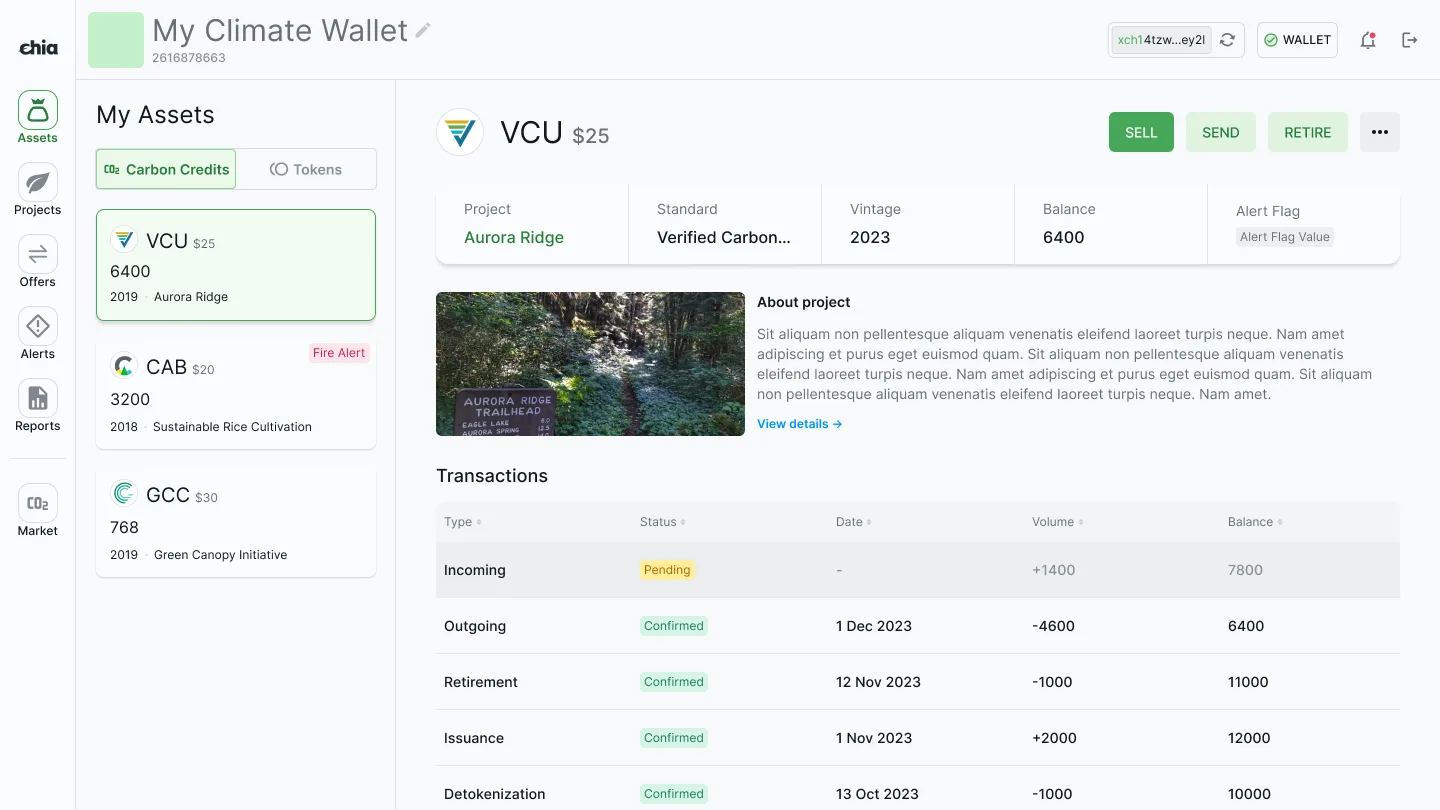
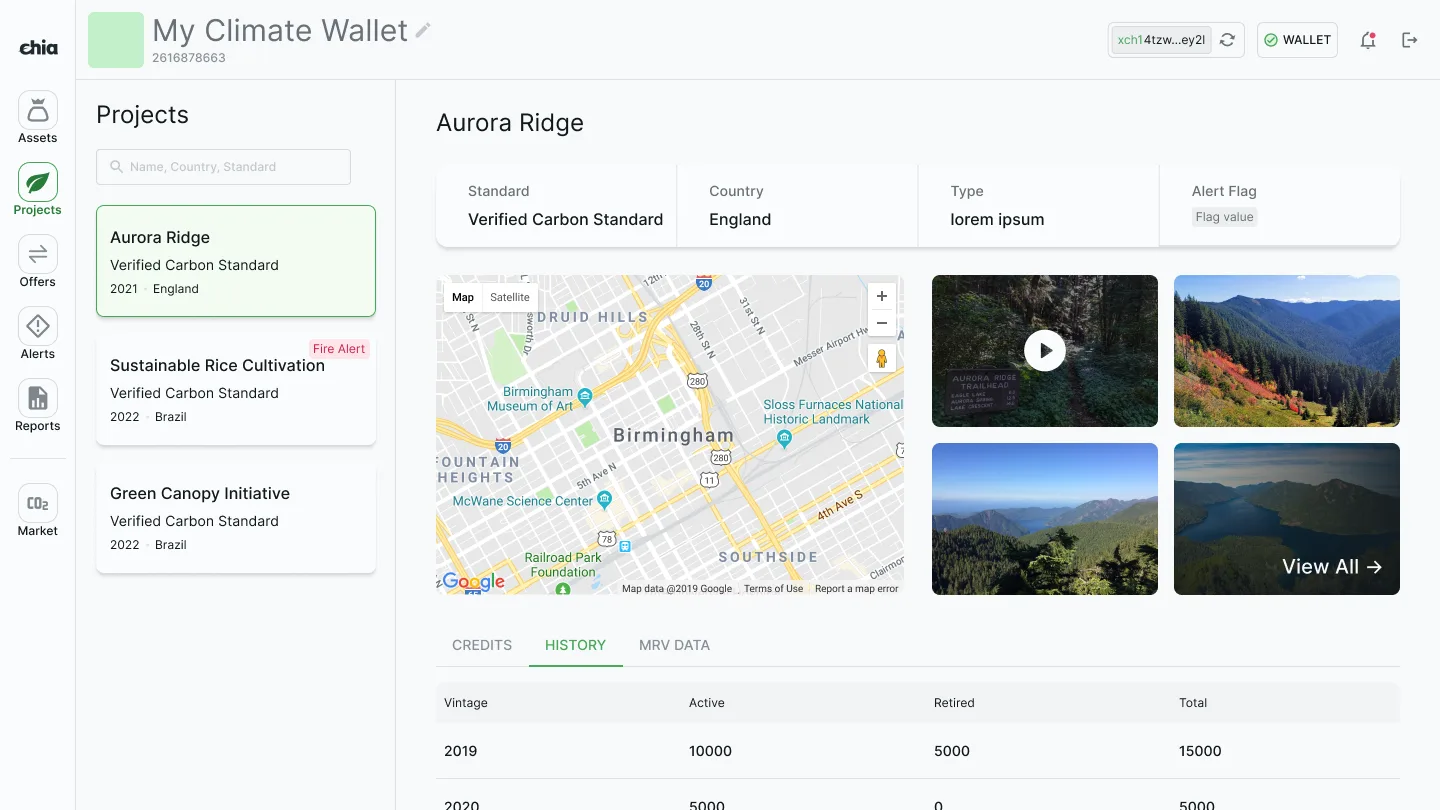
I worked out the wallet from the credit outwards. Every credit got a tile with its project, its standard, its vintage and its balance, and a page of its own with everything that had happened to it. Behind the credits sat the projects, each with the credits it had issued, its history, its verification data, and pictures and a map of the site, so a buyer could see where the carbon came from. Alerts flagged anything that changed on a project, and reports kept every transfer and retirement, ready to download.
For trading I first split the credits the way a market sees them, the ones you own and can offer and the ones you don't and can bid for. Chia's team wanted it simpler, a plain Buy and Sell with the offers kept underneath, so that's what the buttons said. An offer builder turned a sale into a short form that handed back the offer file, and when Chia later asked for a market page, it listed the credits for sale.
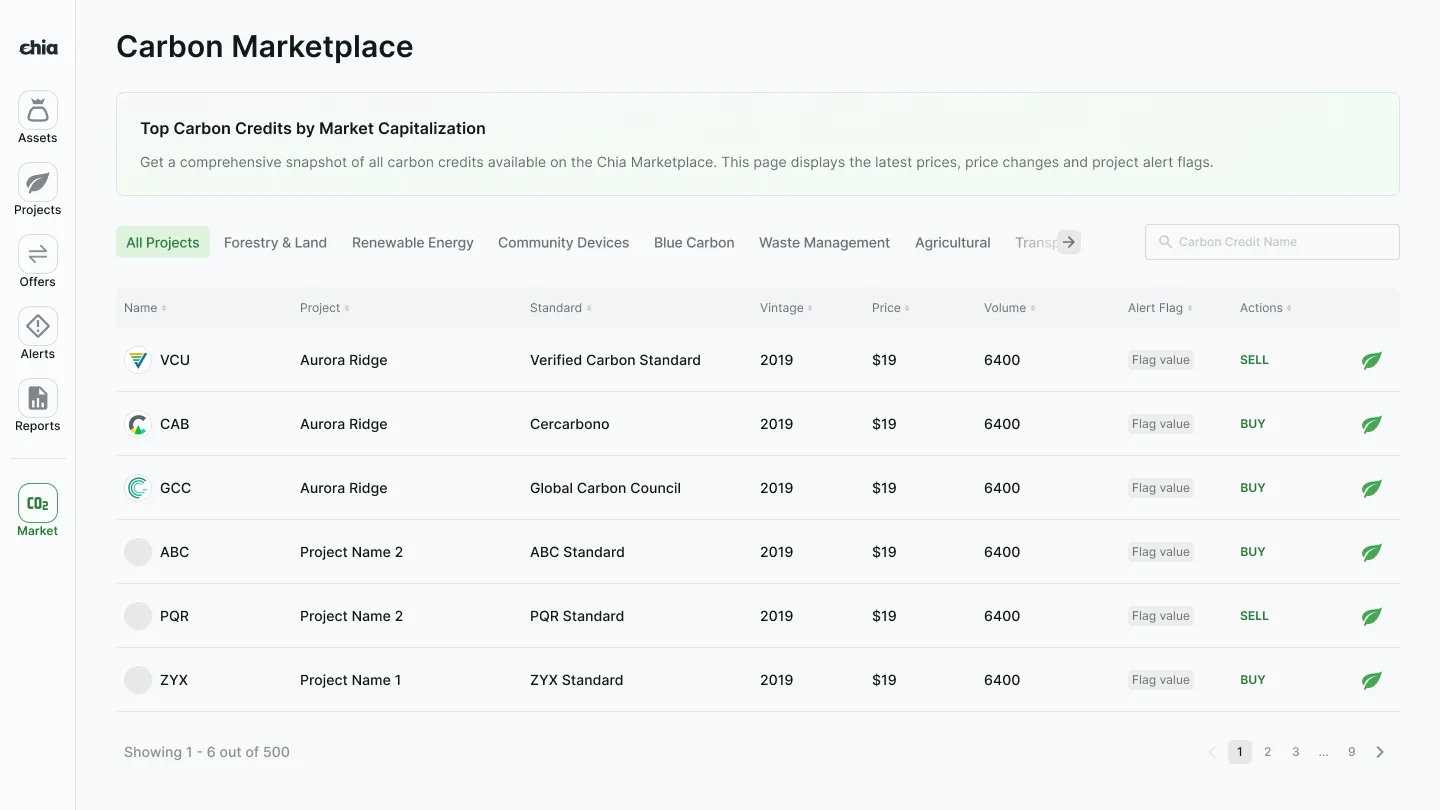
The job was planned for four weeks, and the first full version was in front of Chia in less than one. The team went through it screen by screen and sent back a numbered list. A credit should read in its standard's own unit, such as VCU for Verra's, instead of in tonnes, and only ever in whole numbers. Every credit needed Retire and Send, alerts and reports belonged on the main menu, and the offer screens had to match the ones already in Chia's wallet. Over a second week of changes I took the list into a second version, and the notes from a call on that one into a third, each with its own clickable prototype.
Every screen sat on a small library of components, from the tiles and tabs to a logo for each carbon standard, so each round of changes reached every screen that used them.
The result
Chia had the next version of its Climate Wallet as a prototype it could click through, from a credit's tile to the project behind it, its alerts, its reports and the offer that sells it. It was the first job Chia gave me, and it kept coming back with the next one.
Saif picked up the Climate Wallet when we had almost no time left, and had the whole thing designed and clickable in front of us within a week. The whole team loved it.
Written by Saif Pasha. Built with my team at Silverthread Labs. © 2026 Saif Pasha and Silverthread Labs. Ref. SP-STL-CL-2312
saif@silverthreadlabs.com