Tokenized equity platform on the Chia blockchain for Permuto Capital
Permuto Capital, a joint venture with Chia, wanted investors who'd never touched crypto to hold stocks on a blockchain. I made the calls that are hard to undo before the build, and my team designed and built the platform, from passkey sign-in and identity checks to vaults kept in step with the chain. It went live on Chia's mainnet.
- Client
- Permuto Capital
- Sector
- Fintech, Asset Tokenization
- Scope
- Product DesignBrandingWeb App DevelopmentBlockchain IntegrationIdentity VerificationQA Testing
- Technologies
- FigmaNext.jsNestJSPostgreSQLRedisGraphQLSocket.IOWebAuthnVeriffDocuSignAWS KMSPlaywright
Background
Permuto Capital is a joint venture between Chia and an investment firm, and it's built on one idea. It splits a share of stock into two certificates, one that collects the dividends and one that carries the gains, and each trades on its own, through the usual market or on Chia's blockchain. The investors it wanted, funds and institutions to begin with, had never touched crypto, so they needed to buy, hold and redeem those certificates without ever learning what a wallet is.
It came to me through Chia, and it was the first Chia project I took end to end, from the first idea to full engineering. It started with the brand. At Permuto's request I drew its logo as two half hexagons locked together like a paper clip, and Permuto's CEO signed it off. My team built its landing page next, and then the platform itself.
Permuto would bring me a rough flow of how they saw each part working, drawn as swimlanes, from onboarding an investor to paying a dividend. The business logic in each one was complicated before anyone wrote a line of code. I'd rework it, design it and build it with my team, then stress-test it to find the edge cases and build the logic that handles each one.
The problem: an investor app in step with a blockchain
Every flow carried weight. One purchase order became two certificates, an investor could be an institution or an individual, a certificate could sit with a broker or on the chain, dividends had tax to hold back, and a redemption meant sending both certificates back so they could be burned. Every step that touched the chain had to wait for it, and the chain answers in its own time, so the app had to know where each order stood at every moment and retry whatever failed, without the investor ever seeing any of it.
Onboarding: the institutional investor requests an account, Permuto Capital sends the investor form, the investor fills it in and sends shares to Permuto, and Permuto creates the vaults and issues the certificates. Recovery: the investor logs in, is prompted for recovery, chooses a passkey or 24 words, and the method is set and confirmed. The 24 words reach Chia's Cloud Wallet servers.
The flows kept changing under the build, like a plane being built in mid-flight, and Chia's Cloud Wallet, which the platform runs on, was changing too, with new kinds of vault, a new signing app and new endpoints arriving as the work went on.
Chia's blockchain is too big for any one person to know. For every feature Permuto needed, whether a clawback, a redemption or something only Chia's chain could do, my team found the engineer at Chia who had built that part and learned from them how it was meant to work, and when something broke where the app met the chain, my team usually knew where to look.
What I built
Before the build, I made the technical calls that would be expensive to undo later, the tech stack, the database and how the product would stay in sync with Chia's blockchain. Three apps became two, one Next.js app for investors and Permuto's admins with a NestJS API behind it and PostgreSQL underneath. Chia and Permuto made the business's own calls, such as sign-in by passkey only and who would check investors' identities, and my team built them in. The first set of technical calls held, so when Permuto came back a few months later with its first flows, the build started on ground that was already settled.
The hardest part was keeping the app in step with the chain. The platform talks to Chia's Cloud Wallet over GraphQL, and instead of asking over and over whether something had happened, my team subscribed to it. The server listens for a signature being finished, a phone being linked and a transaction settling, and passes each one to the right person's browser the moment it lands. That's what moves an order on to its next step, and what turns the tick green when an investor links their phone.
How the app stays in step with the chain
For an investor, all of it comes down to a few clicks. They sign up with a passkey, with no password to remember or lose.
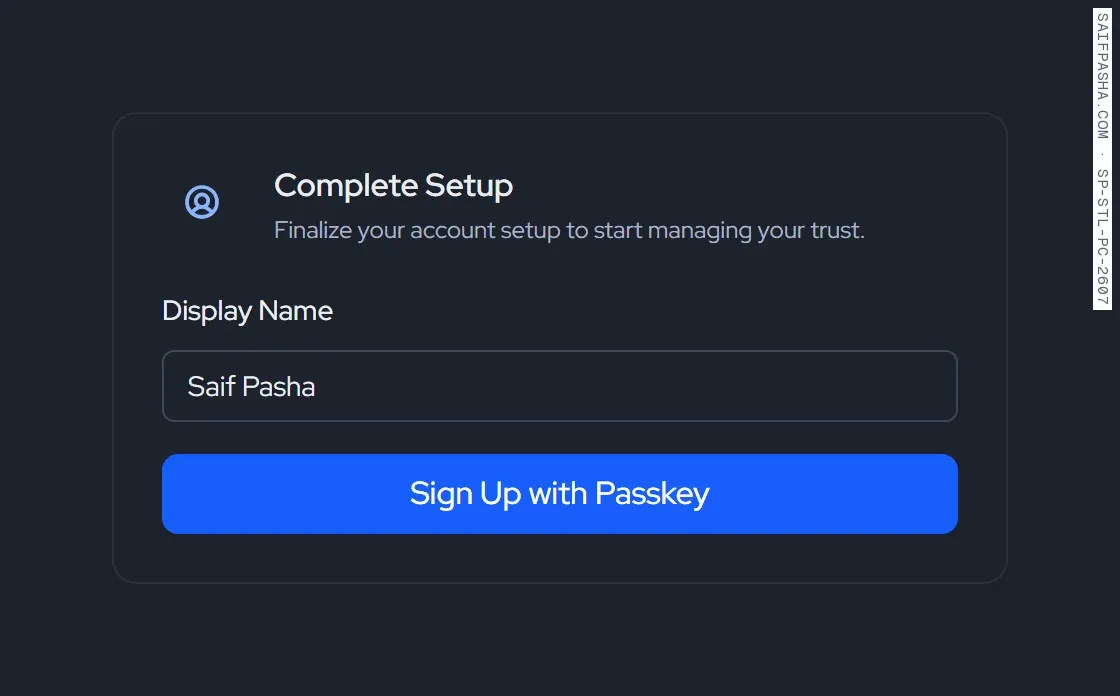
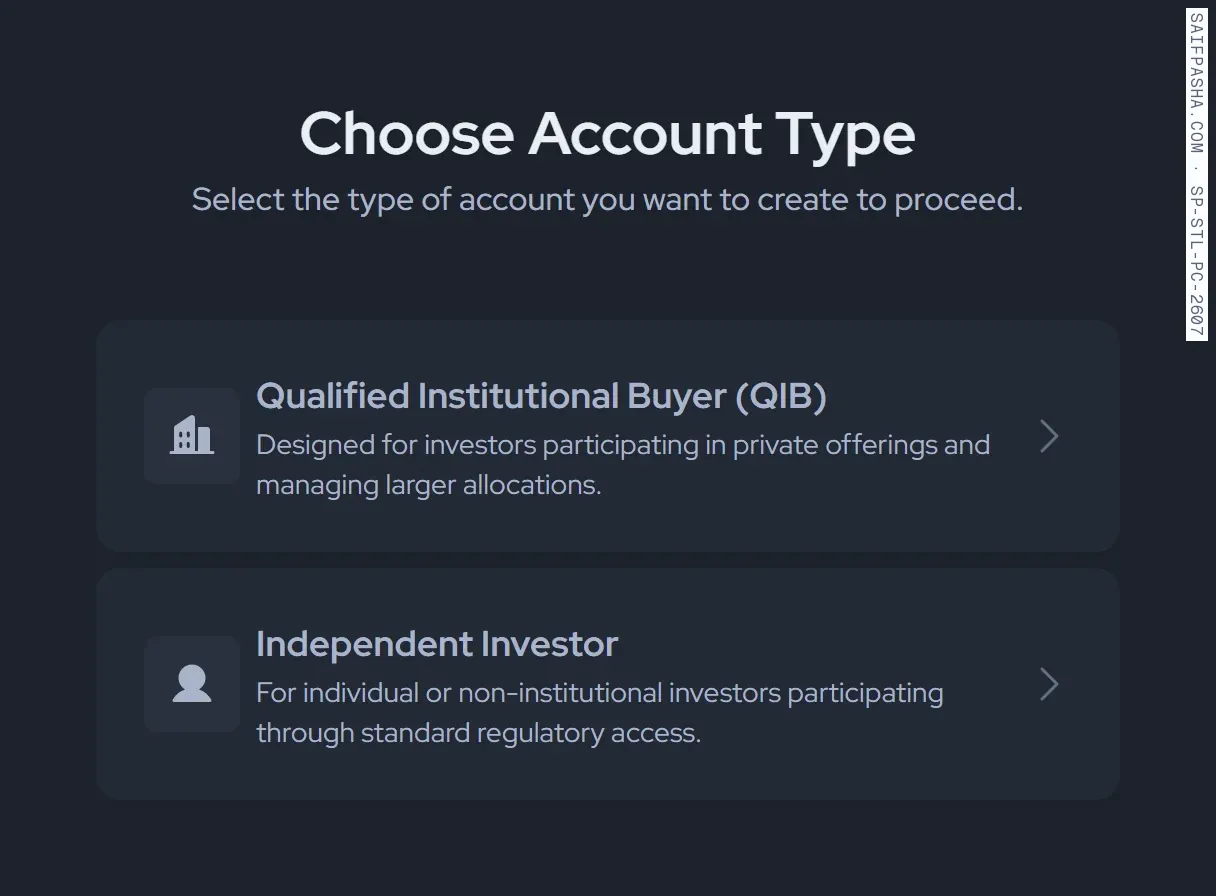
They say whether they're investing for themselves or for an institution, pass an identity check and sign their documents.
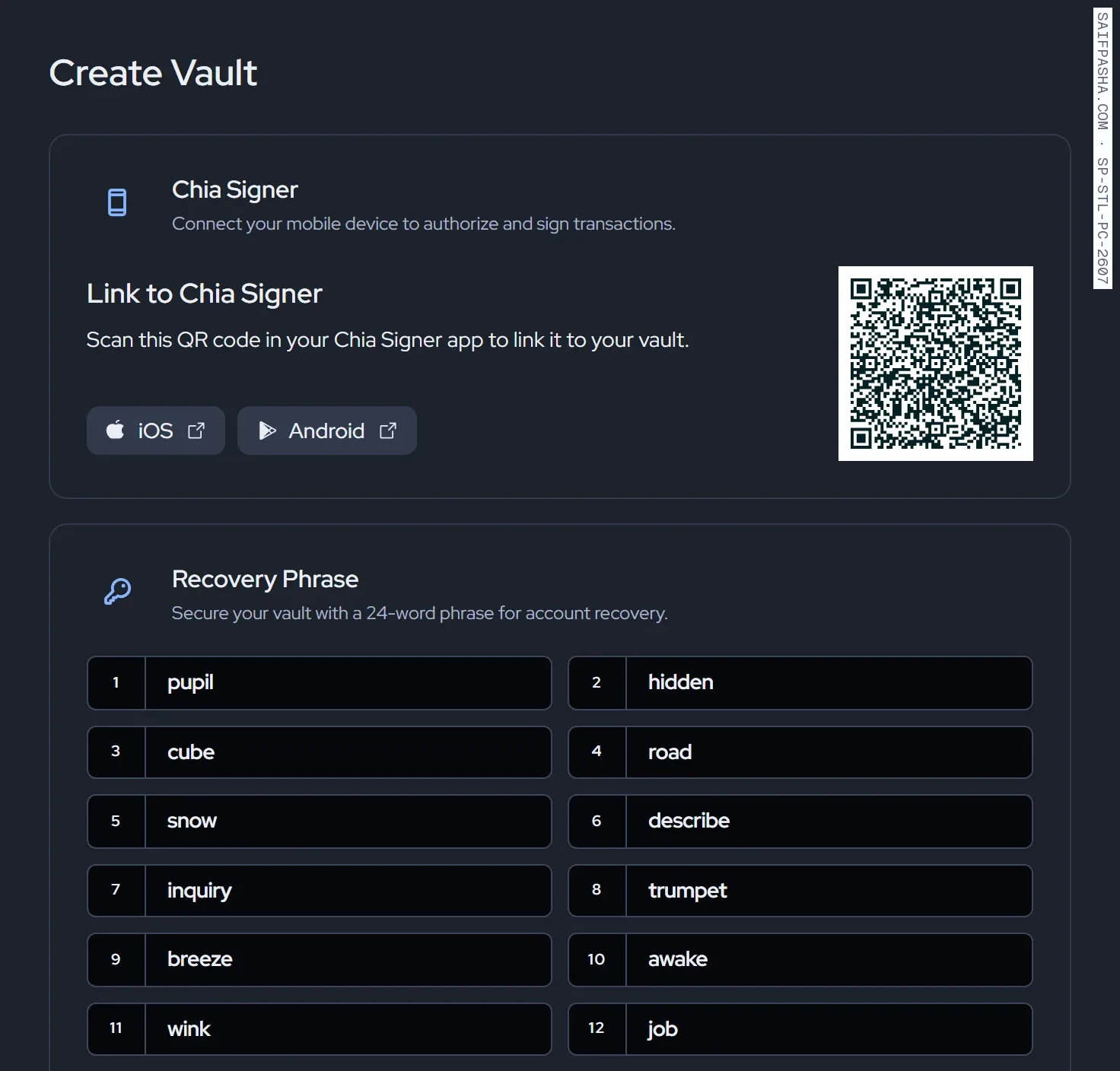
Then they create a vault by scanning a QR code with Chia's signer app, writing down a recovery phrase as they go.
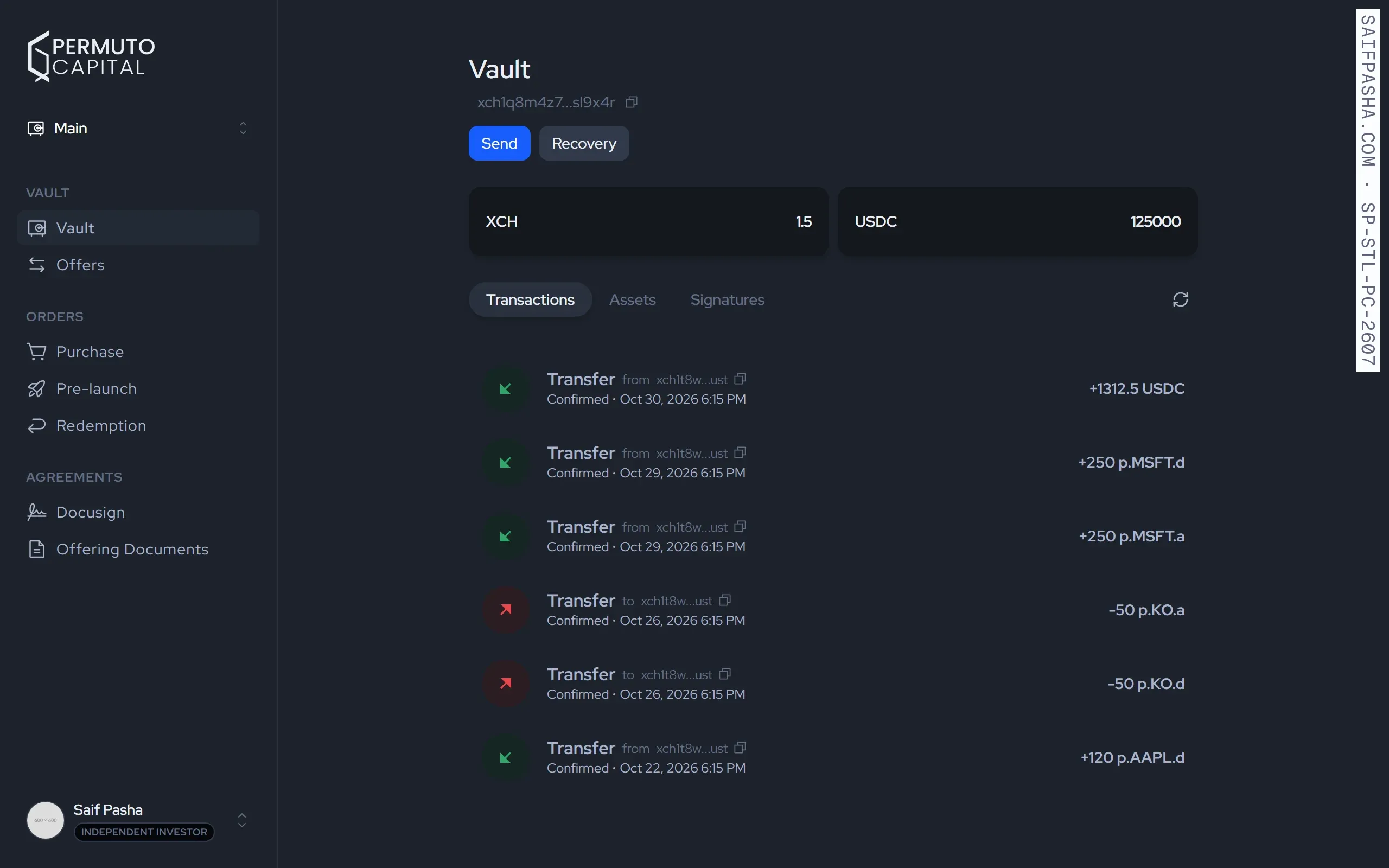
From there they place orders and watch their certificates arrive. One order for 250 shares becomes 250 certificates that carry the gains and 250 that collect the dividends.
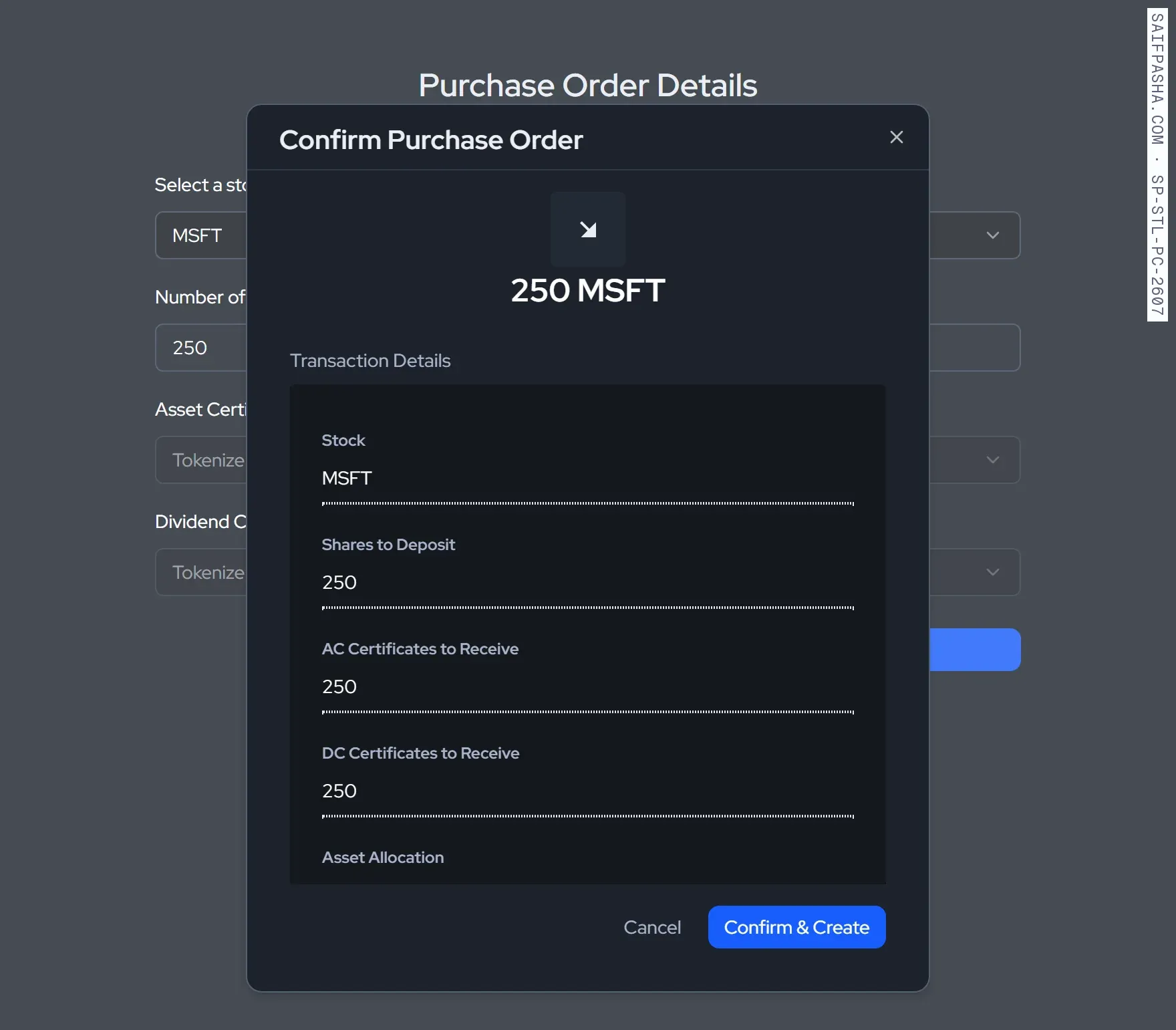
An investor who comes in before an offering opens orders with a promo code, takes a numbered place in line and can earn an NFT for being early. Redeeming runs the other way, and every redemption shows the step it's on, from sending the certificates back to the trust, through Permuto's approval, to burning them.
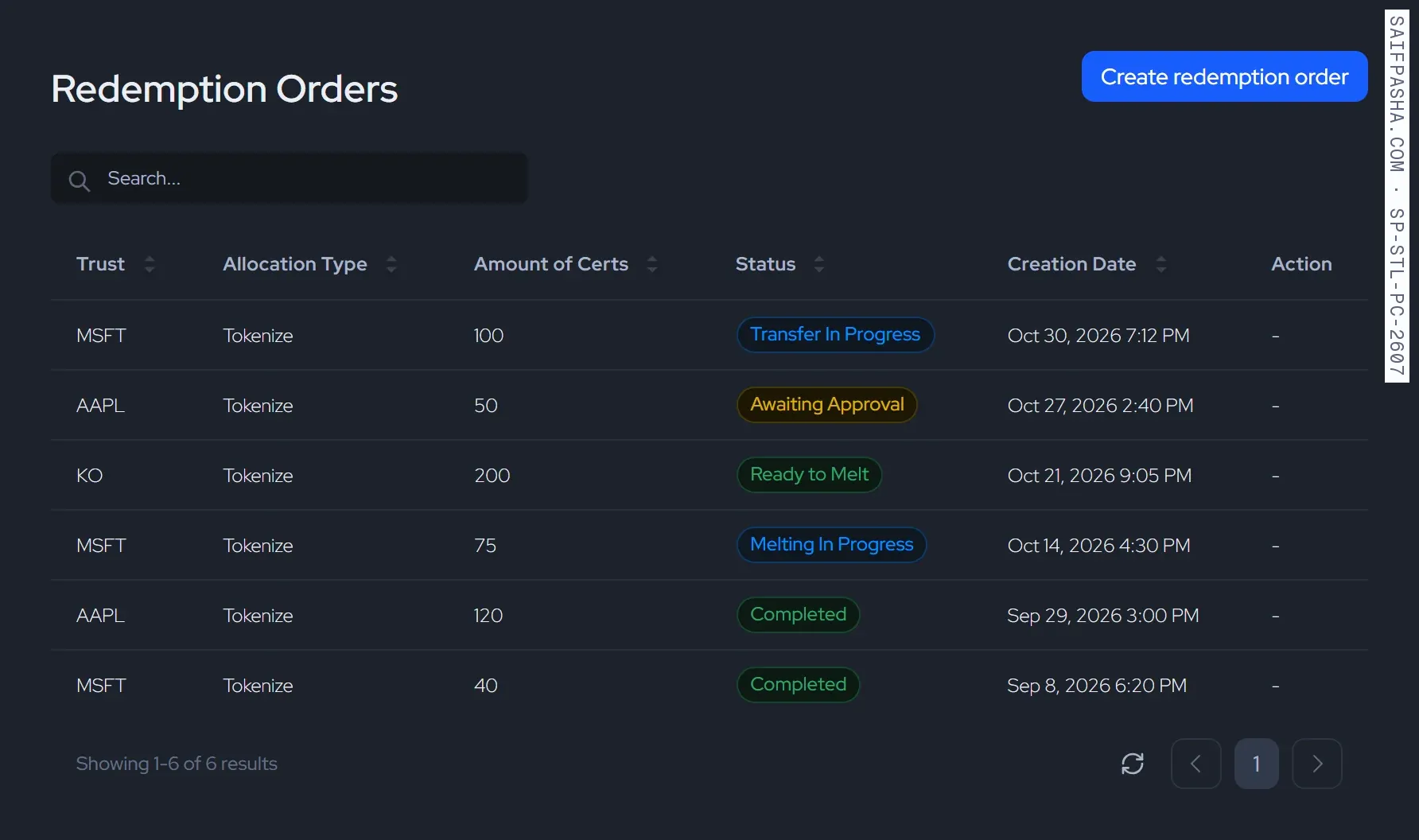
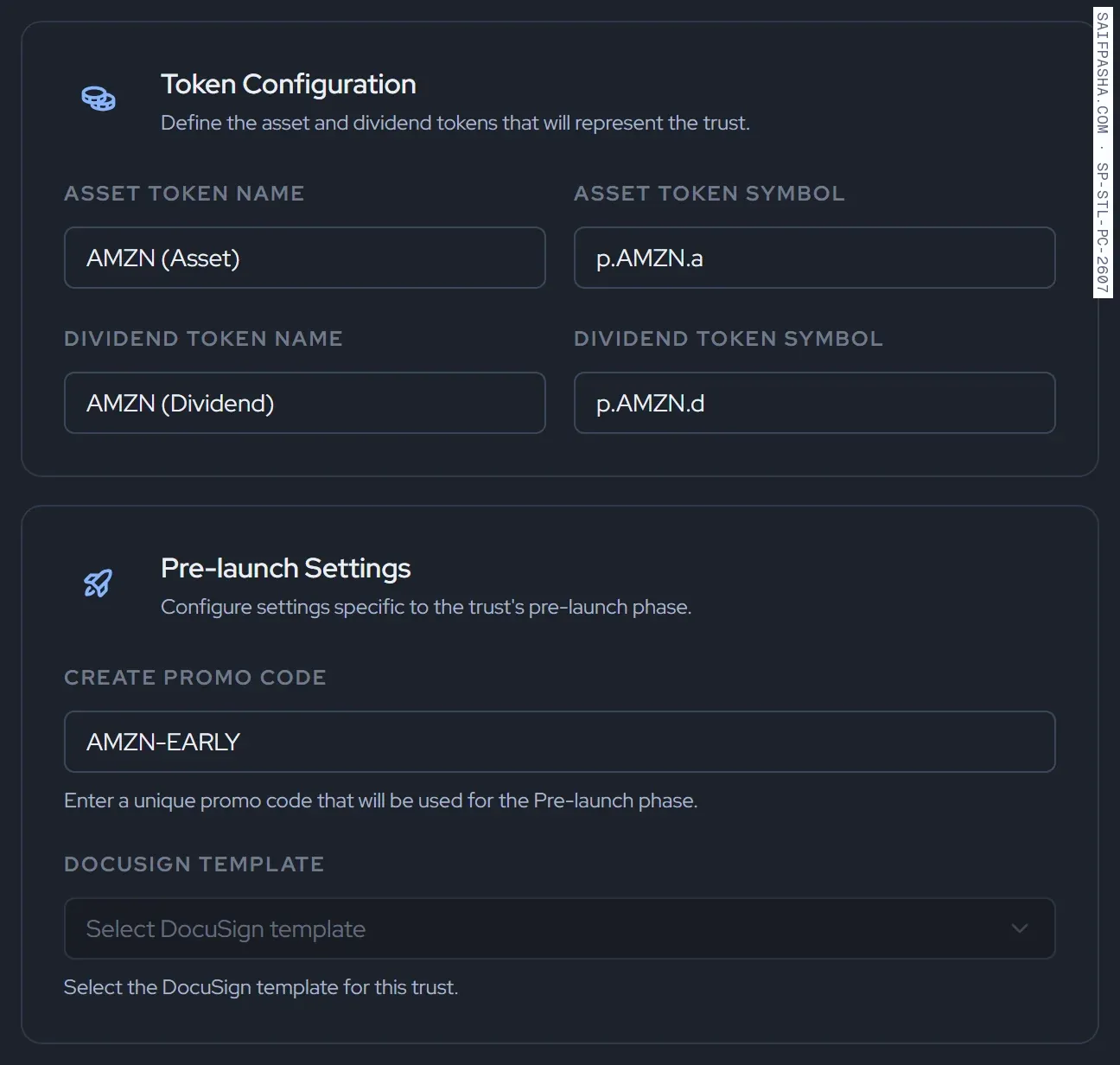
For Permuto's admins, it's the back office. Purchase orders, pre-launch orders and redemptions each land in a queue to approve or deny, and every request shows where it stands, whether it's waiting on a signature, on the chain or settled. They set up each new trust with its own pair of certificates, named for them as they type, and a promo code when it opens early.
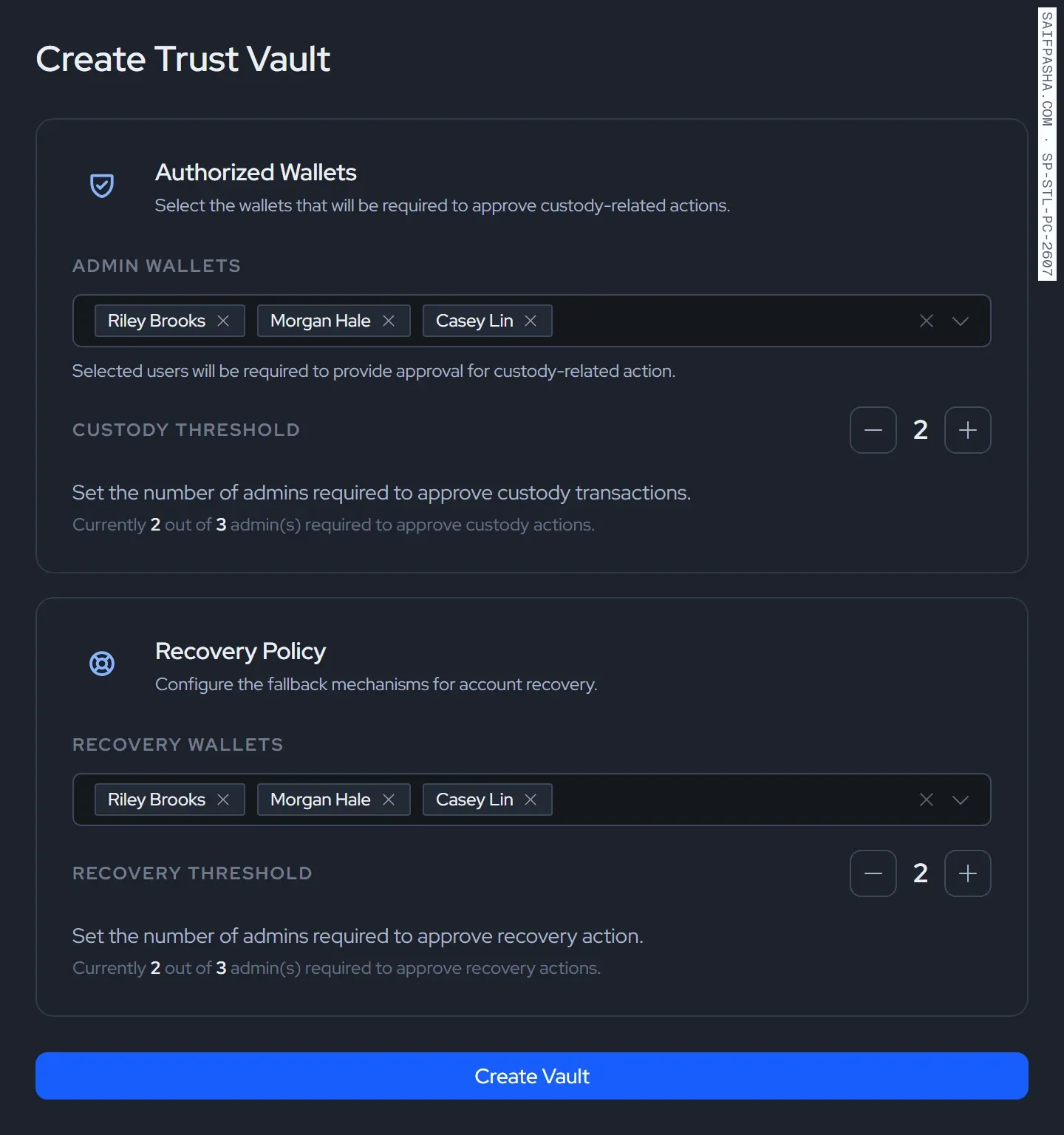
They create the trust's own vault, which needs a set number of admins to approve anything it does, mint and send the certificates, pay dividends from an uploaded file and take every redemption through to the end. They also keep the wire details investors pay to, decide who's invited in and manage the documents investors sign, all without asking my team.
Passkeys and vaults
Identity, tax forms and documents
The result
An independent security firm reviewed the app before launch. It went live on Chia's mainnet, where investors sign up with a passkey, verify who they are and set up a vault on their phone, and Permuto's first offering, by invitation, ran through it.
When Permuto launched its next products, each one joined the same account instead of starting a new app. An investor signs in once, switches between the products they're enrolled in, and each product keeps its own orders and its own invitations, so Permuto has one platform under its own brand that every new product joins.
Every journey that matters, from signing up to an admin's approvals, runs as an end-to-end test in Playwright before a change ships, and the build fails if a new page arrives without a test or a reason it doesn't need one. My team still maintains it.
They were blown away about how much you all have gotten done in just 7 weeks.
Written by Saif Pasha. Built with my team at Silverthread Labs. © 2026 Saif Pasha and Silverthread Labs. Ref. SP-STL-PC-2607
saif@silverthreadlabs.com